A Historic Turning Point for Rohingya Justice: ICJ Rules on Genocide in Myanmar
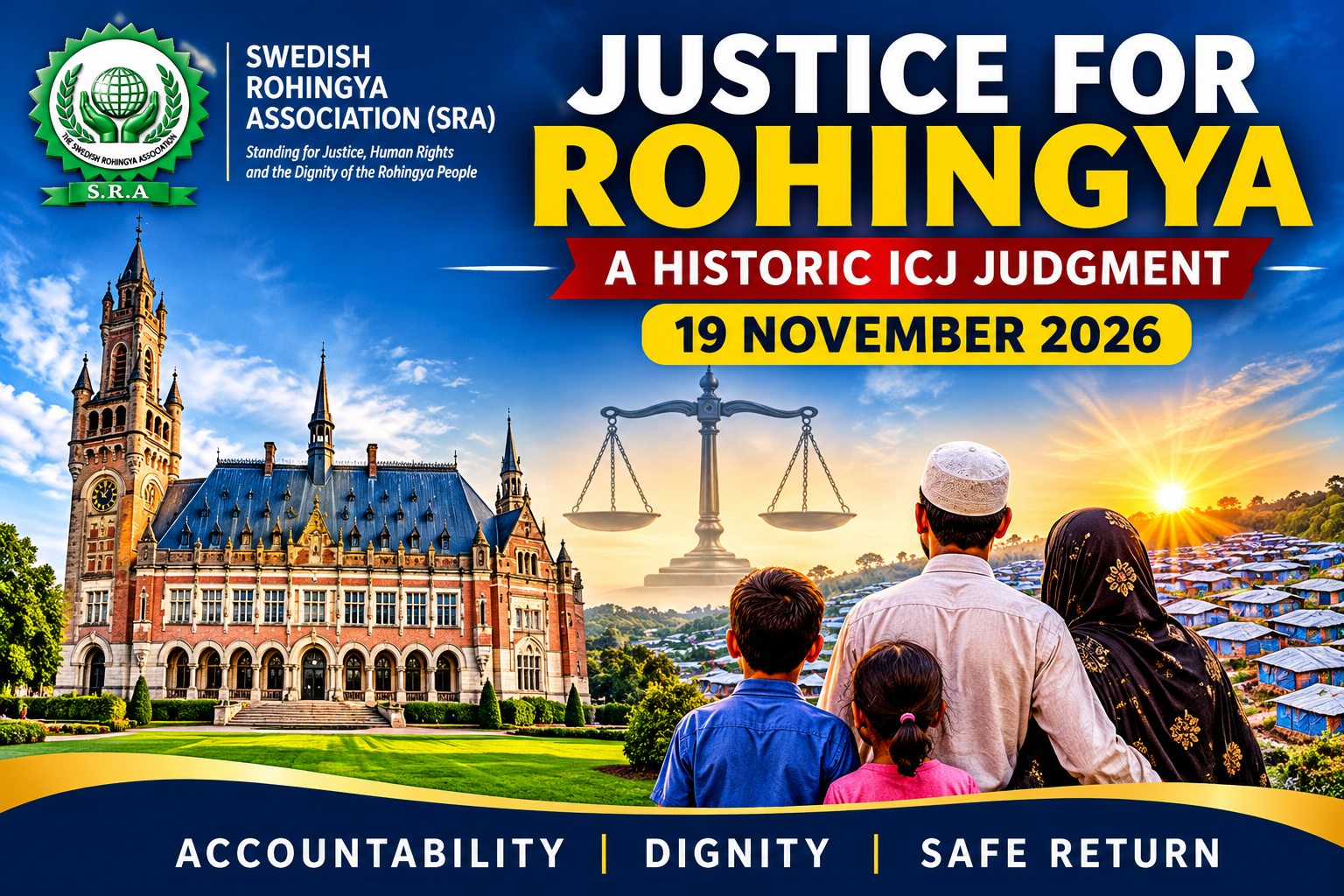
For the Rohingya people, 19 November 2026 marks a historic moment in the long struggle for justice, recognition, and human dignity. After years of violence, displacement, and systematic persecution, the International Court of Justice (ICJ) delivered its judgment in the case concerning the application of the Convention on the Prevention and Punishment of the Crime of Genocide, brought by The Gambia against Myanmar.
The Court found that Myanmar committed genocide against the Rohingya population in northern Rakhine State during the 2017 military operations. This landmark judgment represents a significant step towards accountability for the grave atrocities suffered by the Rohingya people.
Decades of Persecution and Displacement
For decades, the Rohingya community has faced discrimination, restrictions on freedom of movement, denial of citizenship, and systematic violations of fundamental human rights in Myanmar.
The military operations of 2017 resulted in widespread killings, sexual violence, destruction of homes and villages, and the forced displacement of hundreds of thousands of Rohingya people. More than 700,000 Rohingya fled to Bangladesh, joining those who had already sought refuge there.
Today, many Rohingya families continue to live in difficult conditions in refugee camps, separated from their homes, communities, and loved ones.
A Landmark Judgment for International Justice
The International Court of Justice's judgment is an important affirmation that the suffering of the Rohingya people cannot be ignored.
The Court addressed Myanmar's responsibility under the Genocide Convention and set out obligations relating to the prevention and punishment of genocide, accountability, and measures to address the consequences of the violations.
The judgment strengthens the international legal recognition of the atrocities committed against the Rohingya and reinforces the principle that no state is above international law.
Justice Must Lead to Meaningful Action
While the judgment is a historic achievement, justice must go beyond a legal decision.
The Rohingya people continue to need:
- Safe, voluntary, and dignified repatriation to their homeland.
- Full recognition of their identity and citizenship rights.
- Protection of their fundamental human rights.
- Accountability for those responsible for serious crimes.
- Compensation and meaningful reparations for victims.
- Reunification of families separated by persecution and displacement.
- International protection and support until a lasting solution is achieved.
Any return to Myanmar must take place under conditions that guarantee safety, dignity, freedom, and equal rights.
The Responsibility of the International Community
The international community must maintain its commitment to the protection of the Rohingya people. Governments, international organisations, and human rights institutions should work together to ensure that the Court's judgment is followed by meaningful action.
Humanitarian assistance remains essential, but long-term solutions must address the root causes of the Rohingya crisis, including statelessness, discrimination, and the denial of fundamental rights.
Swedish Rohingya Association's Position
The Swedish Rohingya Association (SRA) welcomes this historic development as an important milestone in the pursuit of justice and accountability for the Rohingya people.
We believe that every Rohingya deserves the right to live in safety, freedom, and dignity. The international recognition of the atrocities must lead to concrete measures that protect survivors, restore rights, and create the conditions for a peaceful and sustainable future.
We call upon the international community to remain united and ensure that the voices of Rohingya survivors and refugees are heard.
Justice, Dignity, and Hope for the Future
The ICJ judgment is a historic moment, but the struggle of the Rohingya people is not over. Thousands of families are still waiting for justice, recognition, and the opportunity to return home with dignity.
The world must ensure that this legal milestone becomes the foundation for lasting change.
Justice for the Rohingya is not only a demand of the past; it is a responsibility towards the future.